EU Blue Card for Germany
Your path to qualified employment in Germany
Requirements for the EU Blue Card
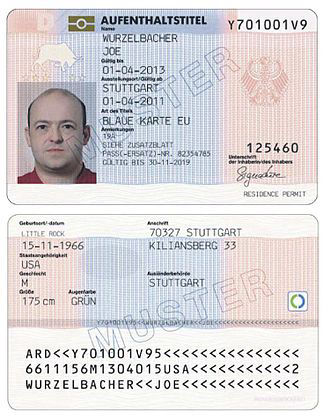
The EU Blue Card is a special residence permit that enables third-country nationals to take up qualified employment in Germany. It was created to specifically recruit international talent and comes with numerous privileges.
Required Qualifications
The central requirement is proof of qualified training. This can be a German university degree, a recognized foreign university degree, or a foreign university degree comparable to a German university degree.
For regulated professions such as doctors or architects, a professional practice permit is additionally required, which must be available or promised at the time of application. A regulated profession is a profession whose practice is legally bound to a specific qualification. For non-regulated professions, which include most academic activities such as IT specialists or business economists, this is not required.
Further Requirements
Minimum Salary as a Decisive Criterion
Another pillar of the EU Blue Card is the gross annual salary achieved. This must reach a certain minimum salary threshold:
Regular Salary Threshold: For all professions that are not considered bottleneck professions, a higher minimum gross annual salary is required. In 2026, this amount is €50,700.00 gross per year (€4,225.00 gross per month).
Reduced Salary Threshold (Bottleneck Professions): For professions where there is a particular shortage of skilled workers in Germany, a significantly lower salary floor applies. These include, for example, managers in IT, natural scientists, mathematicians, engineers. In this case, the minimum salary is €45,934.20 gross per year (€3,827.85 gross per month, as of 2026). A detailed overview of bottleneck professions can be found here.
IT Specialists Without a Formal Degree
You can apply for the Blue Card if you have a concrete job offer and a gross annual salary of at least €45,934.20 gross per year (€3,827.85 gross per month, as of 2026) and have gained at least three years of relevant professional experience at university level in the last seven years. The duration of employment must also be at least six months.
Job Offer
Regardless of qualifications, a concrete job offer from a German employer must always be available. The employment relationship must have a duration of at least six months and must be appropriate to the skilled worker's qualifications. The intended employment must match the academic training.
Overview of the EU Blue Card
For Highly Qualified
Ideal for professionals with recognized university degree
Minimum Salary
From €50,700.00 gross per year (2026)
Fast Procedure
Accelerated skilled worker procedure possible
The Procedure: Application, Duration and Responsibilities
Application Process
Third-country nationals who do not yet have a residence permit for Germany apply for the visa to enter at the German foreign representation (embassy or consulate) in their country of origin. After successful entry, the actual EU Blue Card as an electronic residence permit (eAT card) is applied for and issued at the responsible immigration office at the place of residence in Germany.
If skilled workers are already in Germany with another residence permit, they contact the responsible immigration office at their place of residence directly to apply for the EU Blue Card.
Required Documents
- Fully completed application
- Valid passport
- Biometric photo
- Concrete, signed employment contract or binding job offer (with salary and duration of employment)
- Proof of recognized or comparable university degree (if applicable, certificate evaluation from ZAB)
- If applicable, professional practice permit for regulated professions
Processing Time
The processing time of the application at the foreign representation or immigration office can vary, but usually takes several weeks. In addition, there is the production time of the electronic residence permit (eAT card) by the Federal Printing Office, which usually takes four to six weeks. Companies can use the accelerated skilled worker procedure to significantly shorten waiting times.
Costs
For the initial issuance of the EU Blue Card, fees of €100 apply. The costs for an extension are €93 (or €96 for an extension of up to three months). These fees are usually borne by the applicant. For companies using the accelerated skilled worker procedure, additional administrative fees apply.
Benefits of the EU Blue Card
For Employees
- Fast Track to Permanent Residence: Holders of the EU Blue Card can apply for an unlimited settlement permit after just 33 months. With proof of German language skills at level B1, this period is even shortened to just 21 months.
- Facilitated Family Reunification: Spouses of EU Blue Card holders no longer need proof of German language skills (A1) to join and immediately receive unlimited rights to pursue gainful employment.
- Mobility Within the EU: Holders of an EU Blue Card issued in Germany can switch to another EU member state under facilitated conditions after 12 months of legal employment in Germany (Long-term Mobility). In addition, short-term mobility for up to 90 days within a 180-day period in other EU states for business purposes is possible without a visa.
For Employers
- Simplified Hiring Process: For most EU Blue Card applications, no approval from the Federal Employment Agency (BA) is required. Only for the reduced salary threshold for bottleneck professions or for IT professionals without a formal degree does the BA conduct a comparability check of working conditions.
- Access to Highly Qualified Talent: The EU Blue Card positions Germany as an attractive location for academic professionals worldwide and makes it easier for companies to hire urgently needed specialists.
- Accelerated Procedure: By using the accelerated skilled worker procedure, companies can significantly shorten bureaucratic processes and deploy the skilled worker faster.
The Work-and-Stay Agency is Coming
From mid-2026, there should be only one central digital platform for skilled worker immigration to Germany.
Learn MoreMobility, Extension and Permanent Residence
The EU Blue Card is issued for a maximum of four years. For a shorter fixed-term employment contract, it is valid for the duration of the employment contract plus three months.
Extension
An extension of the EU Blue Card is generally possible at the responsible immigration office, provided that the requirements, in particular the minimum salary, continue to be met and the employment is to be continued beyond the original validity period.
Job Change
Within the first twelve months of employment, a job change must be approved by the responsible immigration office to ensure that the new activity meets the criteria of the EU Blue Card. After this twelve-month period has expired, the job change is free and only needs to be reported to the immigration office.
Permanent Residence and EU Mobility
The fast track to settlement permit (unlimited residence permit) has already been mentioned: 21 months with B1 language skills or 33 months with A1 language skills and proof of compulsory insurance employment during this time. In addition, holders of the EU Blue Card are entitled to the EU Long-Term Residence Permit after five years, with periods of residence with the EU Blue Card in other member states also being counted.
Studies or Further Training
The EU Blue Card is primarily intended for gainful employment. Further training within the scope of professional activity is possible. However, for full-time studies or vocational training, a status change is usually required, i.e., application for a residence permit for study or training purposes.
Distinction from the Opportunity Card
The Opportunity Card is a new residence permit under the Skilled Immigration Act that differs fundamentally from the EU Blue Card. The so-called Opportunity Card is aimed more broadly at skilled workers with professional qualifications or training, not just university graduates, and is not limited to highly qualified academic employment. The EU Blue Card specifically targets highly qualified professionals with a university degree or equivalent qualification and high salary requirements.
The EU Blue Card is the best option if the skilled worker already has a concrete, highly paid job offer and is looking for stability as well as a fast track to permanent residence. The Opportunity Card is ideal for people who want to explore the German labor market locally first before committing.
Ready for the Next Step?
Connect with the EU Blue Card
Frequently Asked Questions

Skilled Immigration Act
The Skilled Immigration Act facilitates the immigration of qualified skilled workers to Germany. It enables the immigration of skilled workers with vocational training and expands the possibilities for the EU Blue Card.
Learn More
Accelerated Skilled Worker Procedure
The accelerated skilled worker procedure enables faster processing of visa applications. Employers can register as certified partners and thus significantly shorten processing times.
Learn More